Stephan Micus Explores the Sea on ‘Traces in the Sand’
His 27th solo album for ECM pairs instruments from Borneo, Japan, Armenia, and beyond.
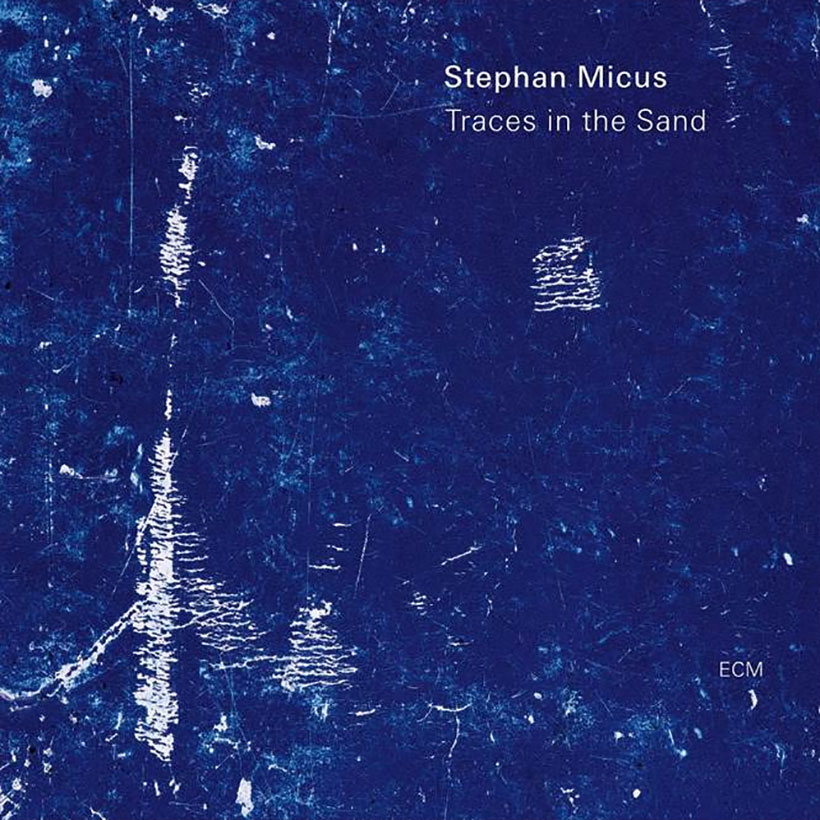
Stephan Micus draws on his relationship with the sea for Traces in the Sand, his 27th solo album for ECM. Featuring a dozen instruments collected around the world, the record reflects the feelings prompted by the ocean’s changing states. Born in Bavaria and a resident of Mallorca for more than 30 years, Micus swims almost every day throughout the year, finding a counterbalance to the sustained concentration his compositions require.

Click to load video
“To focus totally on a composition necessarily narrows down your perception,” Micus says. “So when I go to the sea and see this wide expanse of water and a big horizon it is like an incredible medicine. Wide spaces have always fascinated me, and I try to incorporate them in my music. In this context, the sea has been an invaluable teacher.”
The album opens with hang and African kalimbas supporting melodies played on Japanese shakuhachi and Armenian duduk. Dialogues between instruments recur throughout the record, with separate melodic lines eventually converging. On “Dancing Cranes,” Micus overdubs an Indian cane flute in two octaves over a Mozambican kalimba accompaniment. The flute parts alternate before joining together. Elsewhere, “The Pearl Diver and the Mermaid” pairs duduk with sapeh, a five-stringed lute from Borneo carved from a single piece of wood.
Micus uses kalimbas collected in Ethiopia, Tanzania, Mozambique, and Botswana. These instruments belong to the lamellophone family, producing sound through metal tongues attached to a resonator. On the related tracks “Another Day at Sea” and “Brother Dolphin,” kalimba is accompanied by Irish bodhran drum and plucked Moroccan genbri. “For Layla and Majnun,” named for the lovers of Middle Eastern legend, brings together plucked sapeh and bowed dilruba. A solo duduk piece follows.
“Light on Water” introduces the Japanese sho, a free-reed mouth organ with 17 pipes, in an arrangement combining three sho, three bowed dilruba, and two duduk. The closing piece, “Far Horizon,” returns to alternating solos on sapeh and duduk. Across these combinations, Micus continues an interest in the natural world that has previously drawn him to deserts, forests, and thunder, approaching the sea through the responses it evokes rather than attempting a literal musical depiction.