A Celebration Of Julie London’s Sound and Style
From the intimacy of ‘Cry Me a River’ to her striking album covers, Julie London’s sound and style still resonate.
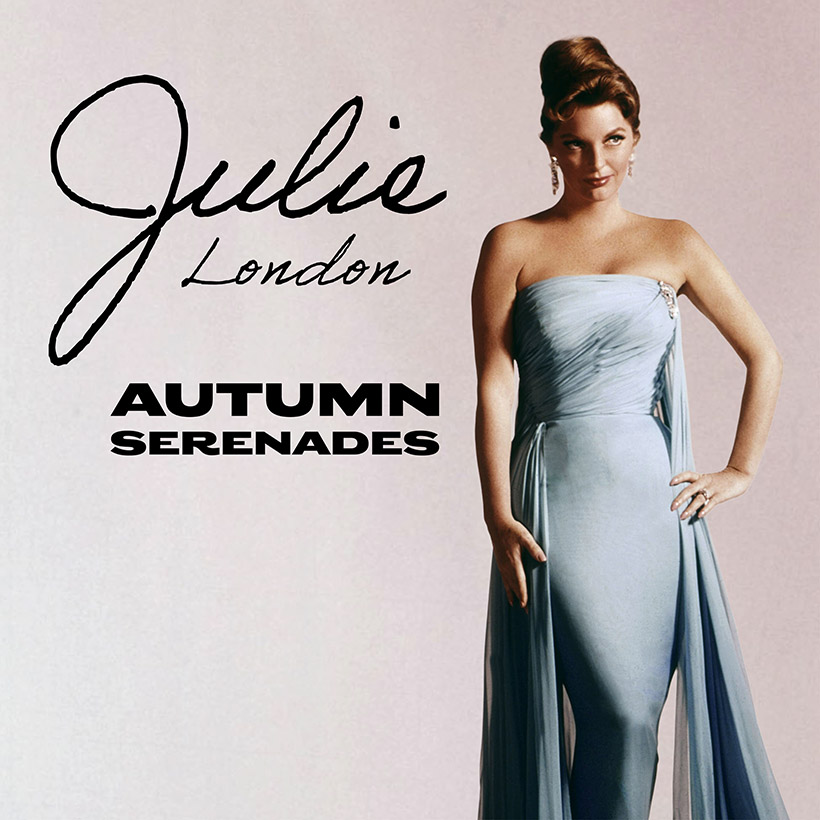
Julie London’s music belongs to another era, but the way she shaped a song still feels close to the present. Her voice is often described as smoky or intimate. London agreed, but explained it thusly: “It’s only a thimbleful of a voice, and I have to use it close to the microphone.” The line can sound like a limitation. On her 1955 debut, Julie Is Her Name, it became a method. She turned the microphone into part of the performance.
Listen to Julie London: Autumn Serenades now.
Listen to “Cry Me a River,” the opening track on Julie Is Her Name. Barney Kessel’s guitar and Ray Leatherwood’s bass leave the vocal almost alone in the room. The bass figure descends before London enters; Kessel answers her in brief, measured chords. That space gives the song’s accusation force. London does not build toward a showstopping climax or decorate every line with runs. She lets the words land with a cool, controlled patience, as if the singer has already reached the end of her anger.

Click to load video
That choice is easy to hear because of the song’s status as a standard. Singers from Ella Fitzgerald to Dinah Washington have made its melody a vehicle for vocal personality and improvisational freedom. London’s recording narrows the frame. Her pitch stays close to speech, her phrasing gives the lyric a conversational edge, and the small guitar-and-bass setting leaves no chorus to hide behind. With close-miked pop so popular today, including the intimate vocal styles associated with Billie Eilish, listeners will recognize the effect immediately. But it certainly wasn’t the norm back when London did it.
“I Should Care,” from the same album, shows how that approach changes with the lyric. The song is not a threat or a rebuke; its narrator is trying to persuade herself that a lost love should not matter. London keeps the line soft and even, letting the gap between the words and the feeling do the work. Instead of turning the melody into a display of heartbreak, she makes the performance sound like a thought she’s not quite sure she should say out loud. Across these two tracks, London offers a model of jazz singing built on intention: a small shift in emphasis, a held-back phrase, or a breath can matter as much as a high note.
Julie London’s visual world
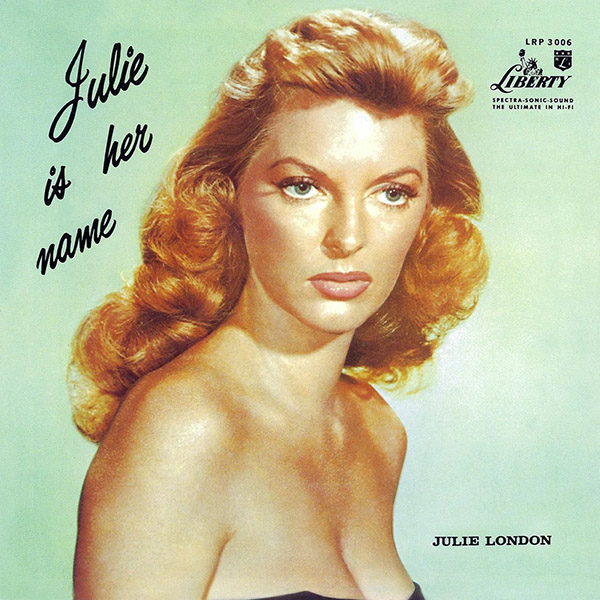
The visual world around that voice was just as carefully constructed. The cover of Julie Is Her Name brings London close to the camera, with bare shoulders, a direct gaze, and a pale green background. There is little scenery to compete with her face. The crop, lighting, and direct gaze make the sleeve feel personal, while the title itself gives the image the simplicity of an introduction. The record’s musical sparseness and its portrait share the same basic idea: attention is drawn inward, toward a single presence.

Calendar Girl, released the following year, takes that same attention and turns it into a full visual concept. Its wraparound sleeve presents London in twelve month-themed poses, bringing pin-up photography and the calendar format together with an album of songs organized around the year. The image is more overtly theatrical than the debut’s portrait, but London remains the center of every frame.
That kind of artist-built visual language is familiar in contemporary pop, where an album’s photographs, clothes, colors, and videos help establish a world around the songs. Lana Del Rey’s use of vintage American imagery offers one point of comparison; Sabrina Carpenter’s polished, hyper-feminine styling offers another. London’s photographs belong to their own period and should not be mistaken for a blueprint, but they show an earlier pop star using image with similar purpose: to set the emotional terms before the first note. Her glamour could suggest availability, distance, playfulness, or control, depending on the song. Sometimes it was all of them in one.
London was a major star in her own time, but her afterlife is especially clear when sound and image are considered together. The details may differ from today’s pop, but the underlying craft remains the same: build a distinct point of view, then let every choice reinforce it. Julie London is not simply a voice from the past. She is a vivid example of how restraint, image, and intention can make a musical persona last.