What Is Liquid-Filled Vinyl?
Learn how these records are made, why they cost more, how they sound, and more.
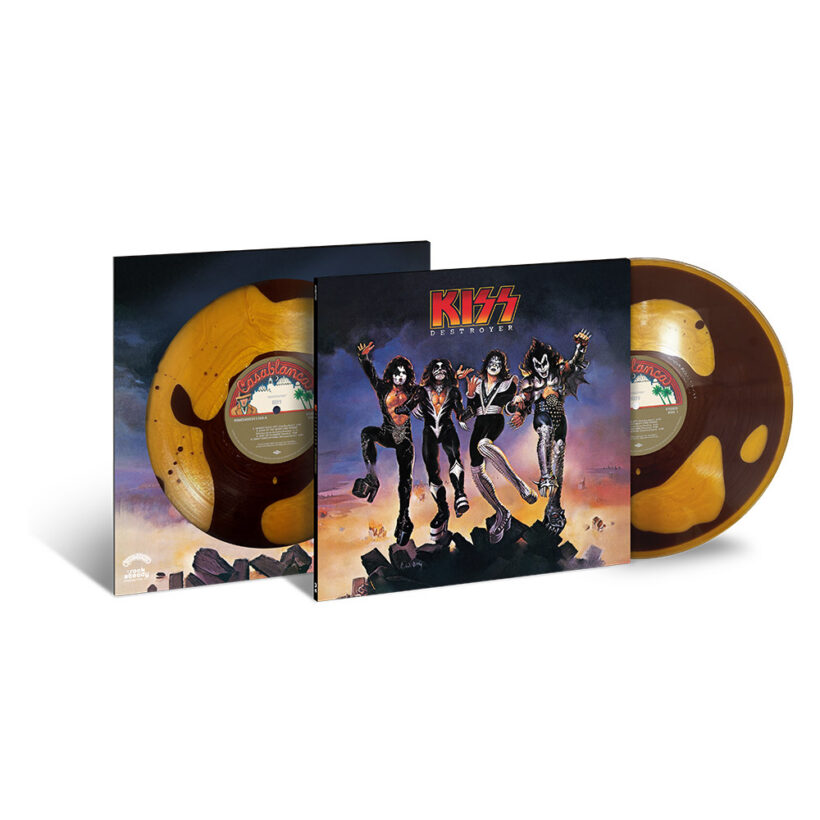
Vinyl has never been just about the music pressed into the grooves. From colored records and picture discs to splatter vinyl and elaborate box sets, part of the format’s lasting appeal is that a record can be an object worth looking at as well as listening to. Liquid-filled vinyl takes that idea somewhere new: inside the record itself.
Recent editions have paired albums with fillings inspired by their artwork, titles, and histories. The Shrek soundtrack has appeared with green “Swamp Juice,” Bob Marley’s Uprising with “Liquid Sunshine,” while the Jaws soundtrack has received an appropriately shark-infested treatment. Rush, KISS, Audioslave, Sublime, and Bon Jovi are among the other artists whose records have received filled editions.
But how does a record with moving liquid inside actually work? And, perhaps more importantly, can you really put one on a turntable?
What Is Liquid-Filled Vinyl?
It is exactly what the name suggests: a playable vinyl record containing a sealed internal layer of liquid. Because it’s playable, the music remains pressed into the vinyl surfaces on the outside of the record. To create a liquid-filled record, two pressings are brought together, leaving an internal space that can then be filled and sealed.
That construction is what gives the format its visual appeal. Different colors can flow together as the record spins, while some designs incorporate glitter or other small objects. The filling can settle and move differently from copy to copy, meaning no two records necessarily look exactly alike once they are in motion.
Does Liquid-Filled Vinyl Actually Play?
Yes.
These are playable records, not simply display pieces. The liquid sits inside the record, while the stylus tracks the vinyl surface just as it would on a conventional pressing.
There is no special playback speed for a liquid-filled record, either. If an album is cut at 33⅓ RPM, you play it at 33⅓ RPM. The liquid may be moving around inside, but your turntable does not need to do anything unusual.
The finished records can be thicker than a standard pressing because of their layered construction. Nonetheless, they work on practically every turntable, although some entry-level players may have difficulty accommodating the additional thickness.
Shop liquid-filled vinyl on uDiscover Music now.
Does The Liquid Change The Sound?
No.
Because the liquid is sealed between two vinyl surfaces, the stylus plays the record in the same basic way it would a conventional pressing. The liquid is there for the visual effect, not to alter the way the grooves are read.
“Liquid-filled,” of course, also does not indicate that an album has been remastered, remixed, or sourced differently. Those details vary by release. The unusual part is the record itself, not necessarily the audio pressed onto it.
Can Liquid-Filled Vinyl Leak?
A liquid-filled record is manufactured as a sealed object intended to be handled and played, but it is still a more elaborate physical product than an ordinary LP.
As with any specialty record, sensible handling matters. Owners should follow the care instructions supplied with the specific release and avoid unnecessary stress, extreme temperatures, or anything else that could damage the record.
In other words, there is no need to treat one like an aquarium sitting between your LPs. But it remains a collectible object worth looking after.
Why Is Liquid-Filled Vinyl More Expensive?
This is where the unusual construction starts to matter.
A standard record requires one pressing for every copy sold. For liquid-filled vinyl, however, each finished record requires two pressings, one for either side. Then comes the additional manufacturing work. The two sides have to be combined, filled, sealed, finished, and quality-controlled. Some parts of that process are completed by hand, and specialty editions are generally produced in much smaller quantities than mass-market vinyl.
So comparing a standard pressing with a liquid-filled edition is not quite the same as choosing between two colors of the same record. The latter uses more vinyl, involves more production stages, requires additional labor, and relies on a specialized manufacturing process. All of those added materials and production steps contribute to the higher price.
So Why Put Liquid In A Record?
Because vinyl has always provided room for artists and designers to turn an album into a physical object.
And at its best, liquid-filled vinyl is not simply liquid added for the sake of it. The format works when the filling becomes part of the joke, concept, or visual identity of the release. The Labyrinth soundtrack turns the film’s infamous Bog of Eternal Stench into a murky liquid-filled design. Jaws and water are, of course, a perfect fit. “Liquid Sunshine” gives Bob Marley’s Uprising its own moving artwork.
That is ultimately the appeal. For collectors who simply want an album on vinyl, a standard pressing may be all that is required. Liquid-filled vinyl offers something else: the familiar ritual of dropping a needle onto a record, combined with a physical design that comes to life once the album starts spinning.