Captain Beefheart’s Odd Fish: ‘Trout Mask Replica’
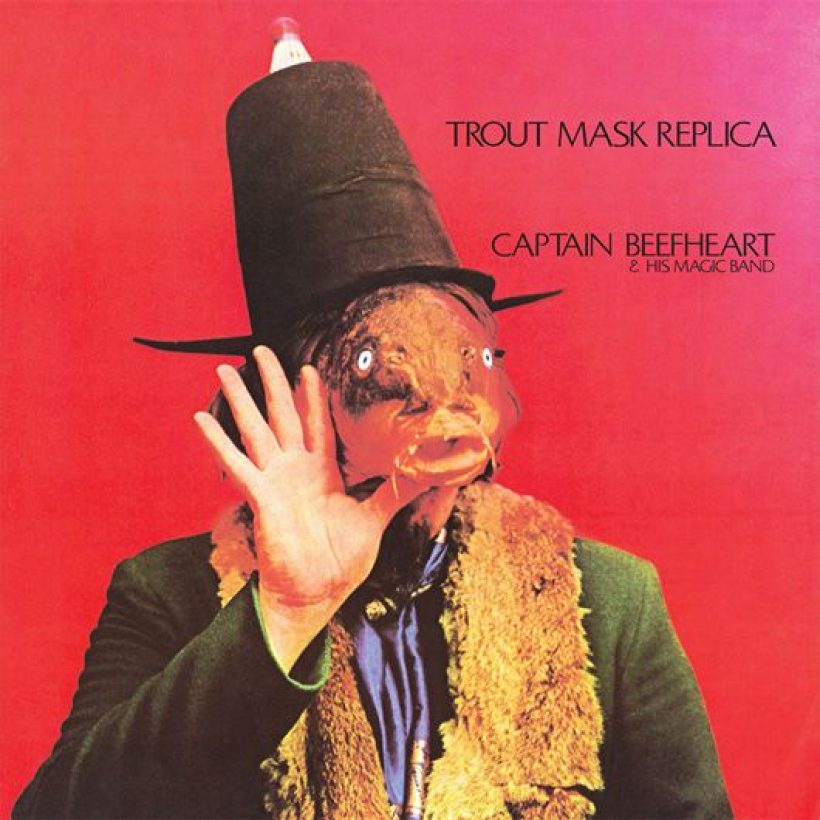
Captain Beefheart’s “difficult third album” was, indeed, just that – not for Beefheart and his Magic Band, but for almost anyone else who heard it. Continuing to elicit a wide range of reactions – variously swinging between “masterpiece” and “unlistenable”, and all points in between – perhaps the only thing that every single person can agree on was captured in Lester Bangs’ adulatory Rolling Stone review of 26 July 1969: that Trout Mask Replica “may well be the most unusual and challenging musical experience you’ll have this year”.
Or, indeed, any year thereafter. Writing in The Guardian in 2006, John Harris likens it to a door in a cartoon, opened “only to find all hell – elephants, possibly, or a speeding train – breaking loose behind it”. Former XTC frontman Andy Partridge, interviewed for the same article, took another angle: “It sounds like a piece of the Somme, lifted up and put in an art gallery.”
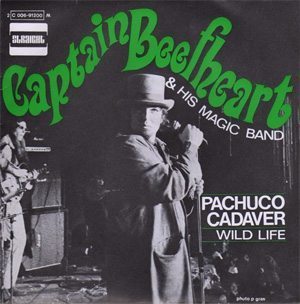 This is, presumably, what happens when your best mate at the time is Frank Zappa, and he’s just launched a record label and gives you carte blanche to record whatever the hell you like. But the biggest surprise about Trout Mask Replica is not the musical left-turns, the non sequitur lyrics, nor the fact that it actually reached No.21 in the UK upon release (the daring French market even released ‘Pachuco Cadaver’ as a single). No, it’s that the chaos – atonal tunings; out of time (not to mention tune) vocals; sudden instrumental deluges that sound as through three different songs are being played at once – was actually meticulously planned. Beefheart and The Magic Band lived together for eight months in a rented house in an LA suburb, hammering these songs out in well documented conditions that were, by all accounts, even more perplexing than the music they were making (“positively Manson-esque” was one visitor’s observation).
Its backing tracks allegedly recorded in just one six-hour sitting, Trout Mask Replica is, then, a testament to the musical brilliance of The Magic Band at that time. You have to learn the rules before you can break them, and there is no way musicians could construct such a maelstrom if they weren’t virtuosos. Lester Bangs was right to treat the album as a free jazz record; it is much more besides, but to approach Trout Mask as a “rock” album is to set it – and yourself – up for a fall.
It is also the sound of unfettered musical questing: the Captain writing his songs on piano – because, well, why not, if you’d never played one before? His relative ignorance freed him from adhering to the instrument’s conventional structures, while Magic Band drummer John French transcribed the fragmented results, piecing them together and assigning various passages to differing instruments.
“The only true Dadaist in rock” was Lester Bangs’ view on Beefheart at the time – a wholly fitting description, given the album’s continued influence on musical anarchists to come, from maverick songwriter Tom Waits to post-punk experimentalists Pere Ubu. Give it time and you’ll come round, as the song structures slowly reveal themselves, and your overwhelming desire to quote phrases such as “A squid eating dough in a polyethylene bag is fast and bulbous – got me?” grants you access to an enticing – and slightly odd – club.
 UK English