The Best Jackson 5 And Early Michael Jackson Songs
Decades later, there’s still a magic to those early Jackson 5 and solo Michael Jackson recordings.
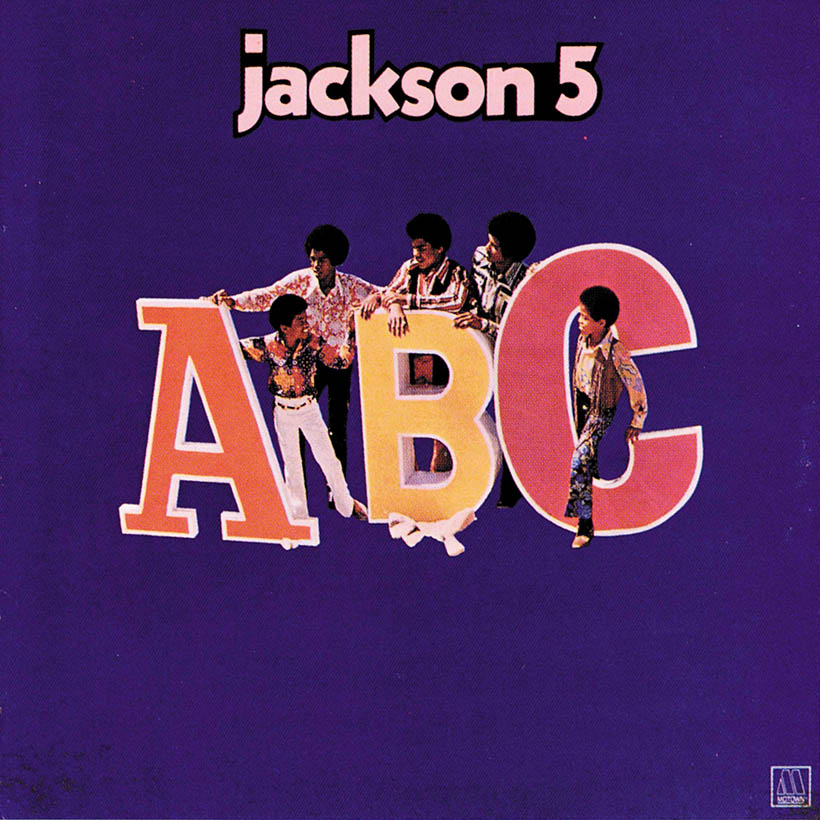
Motown Records had a slogan, “The Sound of Young America,” that it had represented well for the 1960s. But by the end of the decade the company was in transition. Among its biggest stars, Diana Ross was ready to leave The Supremes; Stevie Wonder was growing up; Marvin Gaye and The Temptations traded balladeering for philosophical fare. Dr. Martin Luther King Jr. was dead, free love was aching to break through, and founder Berry Gordy was ready to move his empire out of Detroit to Hollywood. Could anyone make Motown feel hopeful in tumultuous times?
Listen to the Michael: The Birth of a Superstar playlist now.
Gordy had his answer in the form of five brothers from Gary, Indiana. The Jackson 5 — Jackie, Tito, Jermaine, Marlon and Michael — were gifted performers who infused Motown with a new surge of energy. The J5 took the traditions of doo-wop and rhythm and blues and added a youthful exuberance not seen since the days of Frankie Lymon & The Teenagers. Motown added pop magic from their stable of songwriters and producers, as well as a marketing muscle that earned the group visibility enjoyed by so few Black performers: sold-out world tours, live-action and animated television appearances, and a tidal wave of merchandise from posters to coloring books.
As The Jacksons the group continued to captivate the world and, decades later, there’s still a magic to those early Jackson 5 recordings. Here are 15 of our favorites from the group, including key solo tracks from young frontman Michael Jackson, who grew up to rank at the top of the world’s best-known and best-selling entertainers.
The Jackson 5, “I Want You Back” (1969)
Their debut Motown single is one of the best first records by any group, one of the most energetic songs about the pain of a breakup and surely the most high-spirited one sung by an 11-year-old. Recorded in Los Angeles, where Gordy was prepping the whole Motown organization to relocate, “I Want You Back” is pure pop bliss from the opening piano glissando — the label’s essence boiled down into three minutes of sound. A month into 1970, it was the No. 1 single in America.
Click to load video
The Jackson 5, “ABC” (1970)
Deke Richards, part of “The Corporation” writing and production team that created “I Want You Back,” “ABC” and many more, recalled a crucial lesson from legendary Motown songwriter Lamont Dozier, who once played him a medley of hits in a rehearsal room. “He showed me that all the chords were similar, and there was no shame in that,” Richards once said. “It kept the feeling going. I never forgot that.” Writing “ABC” may have been easy as… well, you know, but it’s even easier to get down to — one of Motown’s greatest party-starters of the ’70s.
The Jackson 5, “The Love You Save” (1970)
Just how big were The Jackson 5 in 1970? “ABC,” their second chart-topping single, knocked The Beatles’ “Let It Be” out of the top spot in America, and “The Love You Save” ended the two-week run of The Fab Four’s “The Long and Winding Road” at No. 1. All was forgiven: a grown-up Michael would record two hit singles with the group’s Paul McCartney: “The Girl is Mine” and “Say Say Say.”
The Jackson 5, “I’ll Be There” (1970)
With “I’ll Be There,” a tender ballad crafted to perfection by Berry Gordy, producer Hal Davis, Willie Hutch and arranger Bob West, The Jackson 5 did something no group had done before or has done since: their first four singles all hit the top of the Billboard Hot 100. The brothers’ tender vocals rarely sounded better and Suzee Ikeda, Davis’s creative assistant who worked closely with The Jackson 5, credits Michael’s tireless work ethic. “Michael had good instincts, even at that age,” she later said. “Most artists had cassettes to learn a song, but [he] didn’t use them.”
The Jackson 5, “Who’s Lovin’ You” (1969)
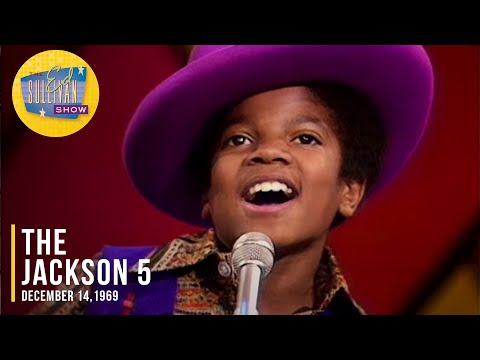
It is one of the great B-sides, twice: in its original form as the back of The Miracles’ 1960 breakthrough “Shop Around,” the first single from a Motown label to sell more than a million copies, and the J5’s “I Want You Back,” where Michael yearned to make you forget the original. After MJ’s heart-stopping rendition during an early appearance on The Ed Sullivan Show, all of America felt it was his song.
The Jackson 5, “Mama’s Pearl” (1971)
At a respectable #2 peak, this was the first Jackson 5 single on Motown to miss the top of the pop charts. “Mama’s Pearl” features more great MJ vocals and great backing vocals from the brothers, but it could have been one of the strangest numbers in their discography had it been released in its original demo form: “Guess Who’s Making Whoopee (with Your Girlfriend).” (That version was finally released on a collection of rarities in 2012.)
The Jackson 5, “Never Can Say Goodbye” (1971)
Motown’s marketing staff worried that “Never Can Say Goodbye,” another ballad like “I’ll Be There,” was too mature for The Jackson 5; Suzee Ikeda recalled challenging Michael to define “anguish,” one of the more surprising words in the lyrics. Were audiences put off, though? No, no, no: the track became their fifth No. 1 hit on the R&B charts, as well as something of a soul staple, covered by Isaac Hayes, Gloria Gaynor and more.
The Jackson 5, “Maybe Tomorrow” (1971)
“Maybe Tomorrow” was the title track of the group’s fifth album in three years and was a more modest chart success than many of its predecessors. But what a sound. Arranged by Gene Page, who was cutting tracks for Motown out west and whose credits would later add the hits of Barry White and Elton John’s “Philadelphia Freedom,” “Maybe Tomorrow” supports not only the impassioned vocals of Michael, Jermaine and their brothers, but a mix of strings, horns and even sitar for a sonic experience like little else in the J5 discography.
Michael Jackson, “Got to Be There” (1971)
Legend has it that Michael was only encouraged to record as a solo artist after The Osmonds, whose hit, “One Bad Apple,” was a straight J5 cop, spun brother Donny off into a hitmaker. In retrospect, though, a group member that talented was an easy choice to give some spotlight of his own, and “Got to Be There” met the moment with its gentle, golden-sunlight arrangement and another winning vocal from the most talented kid on the pop scene.
Michael Jackson, “I Wanna Be Where You Are” (1972)
Michael’s third solo single (following a cover of Bobby Day’s “Rockin’ Robin'”) missed the Top 10 of the pop charts. Audiences didn’t know what they were missing: a fiery, blissful love song given wings by a dazzling arrangement and some serious high notes in the chorus. Written by Arthur “T-Boy” Ross (Diana’s brother) and Leon Ware, the song earned a second wind when covered by Marvin Gaye on his striking 1976 album I Want You.
Michael Jackson, “Ben” (1972)
Oh, rats!! No one could have predicted that Ben, a sequel to the 1971 horror film Willard, would have benefitted from a mellow ballad about the on-screen love between a lonely boy and the oversized rat he befriends. And yet, Michael’s rendition sold the song all the way to the top of the charts — his very first solo No. 1 single — as well as an Academy Award nomination for Best Original Song.

Click to load video
The Jackson 5, “Dancing Machine” (1973/1974)
Even the best boy bands go through thick and thin on the charts. The Jackson 5 were no exception: Michael’s voice was starting to change, and the group wanted more creative control over their music. But “Dancing Machine,” the group’s last Top 10 pop hit (and the No. 5 song for all of 1974, per Billboard) was impossible to deny. Originally featured at the end of their eighth album Get It Together in 1973, an edited version of the tune was the title track of their next LP the following year. Michael’s stop-start dance routine to the song, now known as “the robot,”
stunned audiences hard when he debuted the move on Soul Train.
The Jackson 5, “Buttercup” (1974)
The Jackson 5 were so prolific that, even after releasing 10 albums of studio material for Motown between 1969 and 1975, and another seven across their solo releases, they had recorded more than a half-dozen albums’ worth of additional material. I Want You Back! Unreleased Masters, issued months after Michael’s passing at the age of 50 in 2009, featured the 1974 highlight “Buttercup,” a gentle roller-skating jam written and produced by Stevie Wonder. That same year, Stevie featured the J5 on his No. 1 smash “You Haven’t Done Nothin’.”
The Jackson 5, “Forever Came Today” (1975)
Recorded at the tail end of The Jackson 5’s tenure with Motown, “Forever Came Today,” a cover of a hit by Diana Ross and The Supremes and written by the Holland-Dozier-Holland team, who’d left Motown before The Jackson 5 arrived (what could have been!), was at once a nod to the past and a look toward the future. The track topped an early incarnation of Billboard’s dance charts as disco started to take hold, a foreshadowing of the brothers’ success for the rest of the decade as dance music masters.
Michael Jackson, “One Day in Your Life” (1975)
Michael’s last solo albums for Motown were virtually ignored by radio, with the once-young singer — and his audience — adjusting to changes in his voice and appearance. By the end of the ’70s, he’d proven his mettle as a grown-up star with Off the Wall, an album that was so popular that Motown started re-releasing old material. “One Day in Your Life,” a moving lost-love ballad that sounded most like the adult Michael, was reissued in 1981 and topped the charts in England a year before the King of Pop ascended to the throne with Thriller.