Uriah Heep’s Transatlantic Progress
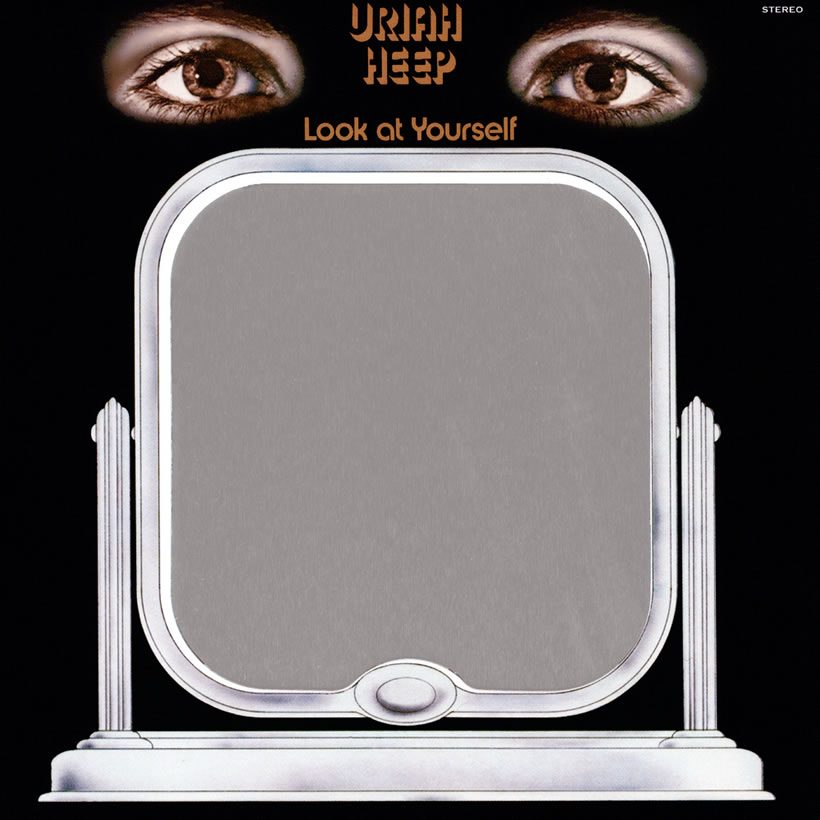
Audiences in their native UK were a little slower to pick up on the emerging rock force of Uriah Heep at the turn of the 1970s than their American fans. After two lower-charting albums in the US, on this day 43 years ago they entered the Billboard chart with what became their first top 100 album there, ‘Look At Yourself.’
Neither the band’s 1970 debut ‘Very ‘eavy, Very ‘umble’ nor 1971’s ‘Salisbury’ made the bestsellers at home, but the first (renamed after the band for the US market) reached No. 186 there and the second No. 103. Encouraged by their American recognition, Heep were releasing their albums in America, on Mercury, before they were available in the UK, on Bronze. Just eight months after ‘Salisbury,’ they returned with ‘Look At Yourself,’ their second album of 1971.
Keyboard player and guitarist Ken Hensley wrote most of the new record, as he did with the majority of the band’s material in this period, with Mick Box on lead guitar and David Byron on lead vocals. Keith Baker’s place on drums had been taken by Iain Clark, with Paul Newton again on bass.
Remembered for songs like the title track, the ten-minute ‘July Morning’ and eight-minute ‘Shadows Of Grief’ (the latter two co-written by Hensley and Byron), the album also featured some notable guest appearances. Three members of Osibisa, the Afro-pop crossover band who themselves released their debut album that year, contributed percussion on the title track, while Manfred Mann, coming out of his pop era and heading towards the Earthband, played synthesiser on ‘July Morning.’
The album went on to peak at No. 93 in the US and, released in the UK in October, became their first domestic chart album, albeit very briefly, with one week on the survey at No. 39. Much better was to come, on both sides of the Atlantic: Heep’s next four albums all went gold in the US and, in the summer of 1975, they made the album top ten at home for the only time, with ‘Return To Fantasy.’
 UK English